How the Facebook algorithm works in 2026
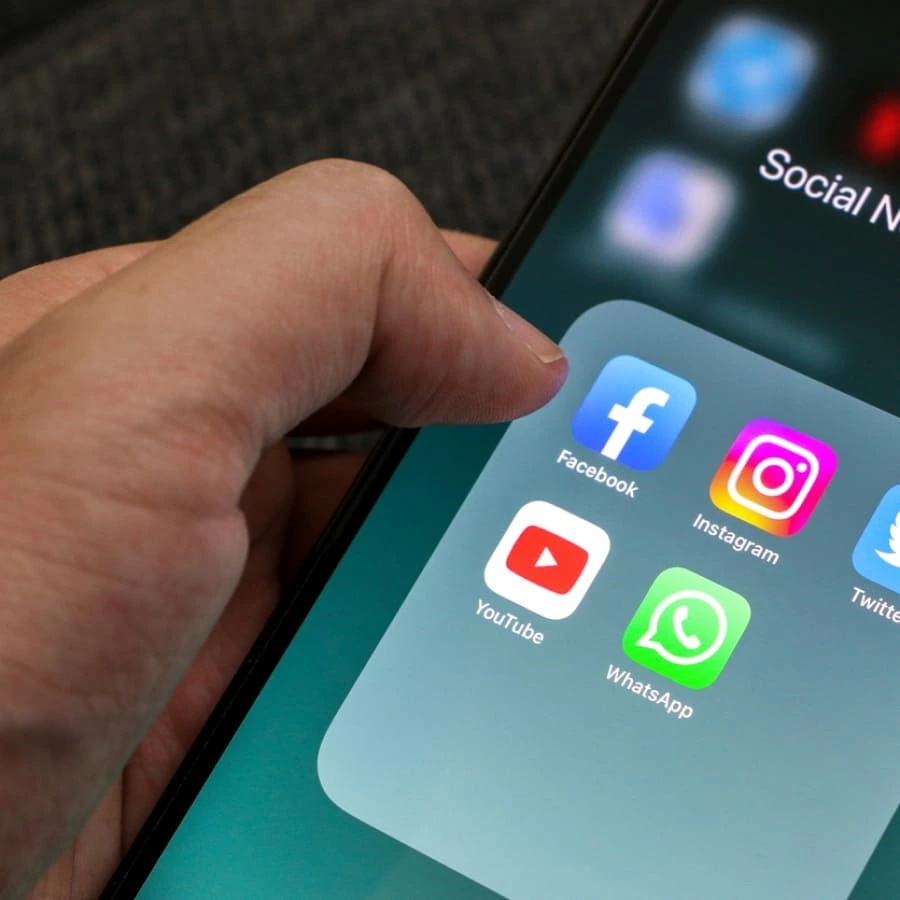
Facebook's algorithm is more sophisticated than ever. It now uses several ranking factors to determine what content appears in feeds. Understanding these factors and how they interact can help your content reach more people.
Key takeaways
- Facebook's algorithm uses a set of rules and an automated AI system to promote content depending on the post creator, content type and user interactions with the post.
- The algorithm prioritises content that generates meaningful interactions and genuine conversations over passive consumption.
- Facebook Groups are becoming one of the most effective tools for building loyalty and bypassing the limitations of the News Feed.
- Content with high engagement can reach a large audience, even if the poster’s follower count is small.
- Reels are now the most effective way to reach people beyond your existing followers on Facebook.
What is a social media algorithm?
A social media algorithm is the automated system a platform uses to decide what content is shown to each user in their feed, timeline or discovery section. Rather than displaying posts in chronological order, algorithms analyse large amounts of data, including user interactions, content type, posting recency and popularity, to personalise what each person sees.
Every social media platform runs its own algorithm designed to keep users engaged. The underlying goal is to maximise time spent on the platform by showing content each user is most likely to find valuable. Algorithms are constantly updated as user behaviour shifts and platforms introduce new features.
Facebook's algorithm decides what content to show users based on several factors, including the relationship between users, individual interests, content type and the number of interactions a post has already received.
A brief history of the Facebook algorithm
Facebook started as a social network for college friends, but it quickly grew into a worldwide platform. As competition for attention increased, organic reach, reducing the number of people you could reach easily.
Here’s how the Facebook algorithm has changed since 2004:
- 2004–2013, from chronology to complexity: Facebook launched with posts in reverse chronological order. By 2009, relevance signals began replacing recency as the ranking factor. In 2011, EdgeRank formalised this by tracking affinity, content weight and time decay. Two years later, it was replaced by a far more sophisticated system drawing on over 100,000 signals.
- 2014–2018, favouring connections: As usage exploded, Facebook introduced filters to surface the most relevant content. By 2018, the algorithm shifted decisively toward friends and family, deprioritising brand pages in favour of meaningful interactions.
- 2023–2024, AI enters the feed: The algorithm began leaning heavily on machine learning to personalise content, while placing greater weight on the quality and credibility of news. In late 2024, Meta launched Andromeda, an advertising algorithm that replaced manual audience targeting with one based on the ad creative itself.
- 2025–2026, short-form video and smarter discovery: All video content was unified under the Reels format in mid-2025, cementing short-form video as the primary discovery tool. By 2026, the algorithm had evolved into a fully AI-driven recommendation engine, less reliant on friends and more focused on predicting what you want to see. Private shares via Messenger or WhatsApp are now strong engagement signals, outweighing likes or reactions.
What makes the Facebook algorithm unique?
Facebook's algorithm uses a personalised ranking. Every post, story and Reel is evaluated and ranked individually based on that user's interests, content engagement and topics, rather than displayed chronologically.
The algorithm also flags and removes content that violates its community standards and works to prevent the spread of misinformation, sensationalist health claims, miracle cures, self-harm content and clickbait. Threatening language, harassment, harmful stereotypes and engagement bait are also actively suppressed.
How does the Facebook algorithm work in 2025-2026?
Facebook's algorithm uses artificial intelligence and machine learning to predict which content each user is most likely to engage with. Its ranking system analyses the available pool of posts from people, pages and groups a user is connected to, giving each piece of content a relevance score before deciding whether and where to show it.
Today’s Facebook algorithm works as follows:
- Predictions drive distribution: The algorithm estimates whether a user will like, share, comment on or click through, based on their previous activity. Posts that generate meaningful interactions, such as comments and shares, rank higher than those that only receive passive likes.
- Reels are central to organic discovery: Facebook Reels are now one of the most effective formats for reaching new audiences. The Reels algorithm favours short-form video that captures attention quickly, uses native features like captions and music, and is filmed vertically. Blurry videos, content watermarked from other platforms and horizontal formats are actively deprioritised.
- Users can shape their own feed: The My Favourites feature lets people prioritise up to 30 accounts, while Snooze temporarily hides content from specific accounts. These choices feed back into the algorithm and affect how widely content is distributed.
- Reach is earned every time: Your visibility on Facebook depends on genuine interaction, not how many followers you have. A smaller, engaged audience that comments and shares consistently will outperform a larger, passive one.
What are the differences between Facebook's algorithm and Instagram's?
Facebook and Instagram are both owned by Meta, but their algorithms work quite differently.
Facebook and Instagram’s algorithms have the following differences:
- Facebook prioritises conversations: It gives particular weight to comments and shares, and favours content from people and relevant Groups over pages.
- Instagram runs multiple separate algorithms: The Feed, Stories, Reels and Explore page each use different signals to decide what to show.
- Audience behaviour differs: Facebook users tend to interact through comments and shares, often within group contexts. Instagram users engage primarily through likes and saves.
- What this means for you: Treat the two platforms differently, even when you're cross-posting the same content. A caption written to spark comments on Facebook won't necessarily do the same job on Instagram.
Posting best practices: beating Facebook's algorithm
You can optimise your Facebook content to improve engagement, reach and audience relationships.
Use a variety of formats, including Reels, videos and images
Visual content consistently generates stronger engagement than text-only posts. Using high-quality visuals that reflect your style will make content more appealing to your audience. Native features like Facebook's built-in captions, music and effects send positive signals to the algorithm and help content feel native to the platform.
Aim for meaningful interactions over engagement bait
The algorithm actively suppresses posts that explicitly ask users to like, share or comment without offering genuine value. Focus instead on content that sparks real conversation. Ask thoughtful questions, share useful information and reply to comments promptly, since content generally needs strong early engagement to be shown widely.
Use interactive features on your page
Polls, quizzes and live videos boost engagement metrics and signal to the algorithm that your content is generating active participation.
Find your best time to post
Consistent posting keeps your audience engaged and signals ongoing activity to the algorithm. But don't overdo it. Posting too frequently can reduce engagement per post and dilute your reach.
Facebook Insights, the platform's built-in analytics tool, is available to all business and creator pages. It shows data on reach, engagement, follower demographics and audience activity times, making it one of the best ways to understand what's working and when your audience is online. You can use it to identify your best posting times and track which formats generate the strongest response, then use a scheduling tool to publish at the right time.
Test and experiment to increase your page and content visibility
Don't be afraid to try new formats and posting strategies. Look at the numbers and adjust your approach accordingly. Every network runs on its own logic, so test what works on Facebook specifically rather than assuming a tactic that works on Instagram will transfer directly.
Does replying to comments quickly boost the Facebook algorithm?
Yes, replying to comments builds engagement and boosts content. When you reply, it restarts the engagement cycle, often prompting further replies and increasing the post's visibility in the feed.
How do creators work with brands on Facebook?
Brands choose creators based on engagement and fit, not just follower count, so knowing your numbers and your audience matters more than chasing reach.
- Engagement and fit beat follower count. Brands look for creators whose audience is genuinely engaged and well-matched to their own. Know your engagement rate and be able to describe who your community actually is.
- Your authentic voice is the product, so protect it. Sponsored content only works if it still sounds like you. Push back on briefs that would turn a post into a straight advert.
- Get it in writing before you start. Agree deliverables, timings, usage rights and payment before any work begins.
- Always disclose paid partnerships. A paid or gifted post is advertising and must be clearly labelled. In the UK, this means using Meta's paid-partnership label alongside a clear written declaration, in line with ASA and CMA rules. Remember to check the guidelines regularly to keep up with the latest rules.
- Make yourself discoverable. Brands often find creators through influencer marketing platforms that search by engagement, audience and niche, such as Kolsquare's creator database. A clear, active presence makes you easier to find in the first place.
Facebook and Instagram are both Meta platforms, so brand partnerships and content often span the two, and Meta's branded-content label works across both. On Facebook itself, monetisation also includes in-stream ads, Stars and fan subscriptions, so brand deals are one route to income, often shared with Instagram, rather than a Facebook-only path.
How do you keep posting without burning out?
You can post consistently on Facebook without burning out by batching content, prioritising depth over volume, and measuring yourself against your own data rather than anyone else's.
- Batch content: Draft in blocks so you're not forcing out a post every single day.
- Depth beats volume: Facebook rewards genuine conversation, and over-posting dilutes reach, so one considered post beats several pieces of daily filler.
- Judge yourself on your own data: A slow month isn’t the end of the world. Look at the data and see what’s changed and why.
- Ask for fair pay: Fair pay and respectful partnerships are what make creating sustainable long-term, rather than something you burn out chasing.
The future of Facebook's algorithm: changes from 2025-26 and beyond
Meta doesn't share the specifics of how its algorithms work, since the recommendation system is central to the platform's value to users and advertisers alike. That said, there are signals about where Facebook is heading.
Here’s what’s likely to change on Facebook over the next few years:
- AI-driven personalisation will grow: Meta now uses hundreds of AI models to predict what content each user will value. The Andromeda update, introduced in late 2024, replaced the old social graph system with a discovery engine that uses deep neural networks to read content and find the right audience in real time.
- Poor AI content will be flagged: Meta now requires "Made with AI" labels on photorealistic video, audio and images that have been created or altered by AI. Low-effort or heavily automated content that fails to earn genuine interaction will struggle to rank.
- Regulatory pressure is reshaping the feed: In October 2025, the Amsterdam District Court ruled that Meta violates the EU Digital Services Act by not giving users a meaningful choice between algorithmic and chronological timelines. Facebook is now testing options for users to choose between the two feed types in response.
- The "Friends tab" signals a push for social reconnection: In early 2026, Mark Zuckerberg announced a dedicated Friends tab showing only posts from friends, with no recommended content, describing it as "phase one of bringing back OG Facebook."
Facebook Groups are becoming central to the platform's future
As users scroll less through the News Feed, they're spending more time interacting in Facebook Groups, and that shift matters for creators too. With over 3 billion monthly active users on the platform, building or joining relevant Groups is a real opportunity to deepen your relationship with your audience.
Groups create a sense of community and exclusivity that the News Feed can't replicate. People who feel part of a group around shared interests tend to engage more consistently and trust what they see. Groups also tend to reduce spam and harmful comments, since the more private, accountable environment makes people feel safer engaging genuinely.
Many creators are increasingly using relevant Facebook Groups, alongside Messenger and WhatsApp, to build closer relationships with their audience. Rather than broadcasting to a passive feed, this approach enables direct, personal conversation around a shared interest. It works particularly well for niche content, loyalty communities and audiences built around a specific lifestyle or value set.
The downside is how much time and resources a Group requires. It's not a quick-reach tactic and should be treated as a long-term investment. But if you're willing to commit, running or actively moderating your own Group can extend your reach and build the kind of loyalty the News Feed alone can't deliver.
How does Facebook's friend suggestion algorithm work?
Facebook's friend suggestion algorithm is based on several signals, including your existing connections, profile information and activity on the platform.
- Existing connections: Facebook's algorithm analyses your existing connections, including friends, family, colleagues and other acquaintances. If several people are already friends with someone in common, Facebook may suggest them to you.
- Recent activity: Facebook can suggest friends based on recent activity, such as commenting on or sharing another person's post.
- Profile information: The algorithm accounts for details like city, school, university, workplace and interests. Users with similar profile information will probably appear as suggestions to each other.
- People search: If you've searched for a specific person on the platform, Facebook may suggest that you add them as a friend.
These factors are part of the current process, but the algorithm may change over time as Facebook continues to update it.
Develop better content that reaches wider audiences
Facebook's algorithm follows a set of rules that decides which content gets shown. But understanding it is only the first step. Consistently reaching wider audiences comes down to a combination of quality content, genuine community engagement and using your own data to guide decisions rather than guessing.
FAQ
Does Facebook still work for creators in 2026?
Yes, mainly as a reach-and-community channel: Reels for discovery and Groups for loyal community, often run alongside Instagram rather than as a primary stage on its own.
Do Reels get more reach than regular posts?
Generally yes. Short-form vertical video is now Facebook's main discovery format and is favoured over text-only posts.
Are Facebook Groups worth it for creators?
They can be, for building a loyal community and genuine conversation, but they're a long-term commitment rather than a quick-reach tactic.
How is Facebook's algorithm different from Instagram's?
Facebook leans on comments, shares and Groups, while Instagram runs separate ranking systems per surface and leans more on likes and saves.
When is the best time to post?
There's no universal answer. Use Facebook Insights to see when your specific audience is active, since this varies by niche and location, including among UK community and Group audiences, where evening and weekend activity in Groups tends to run higher than on the main feed.